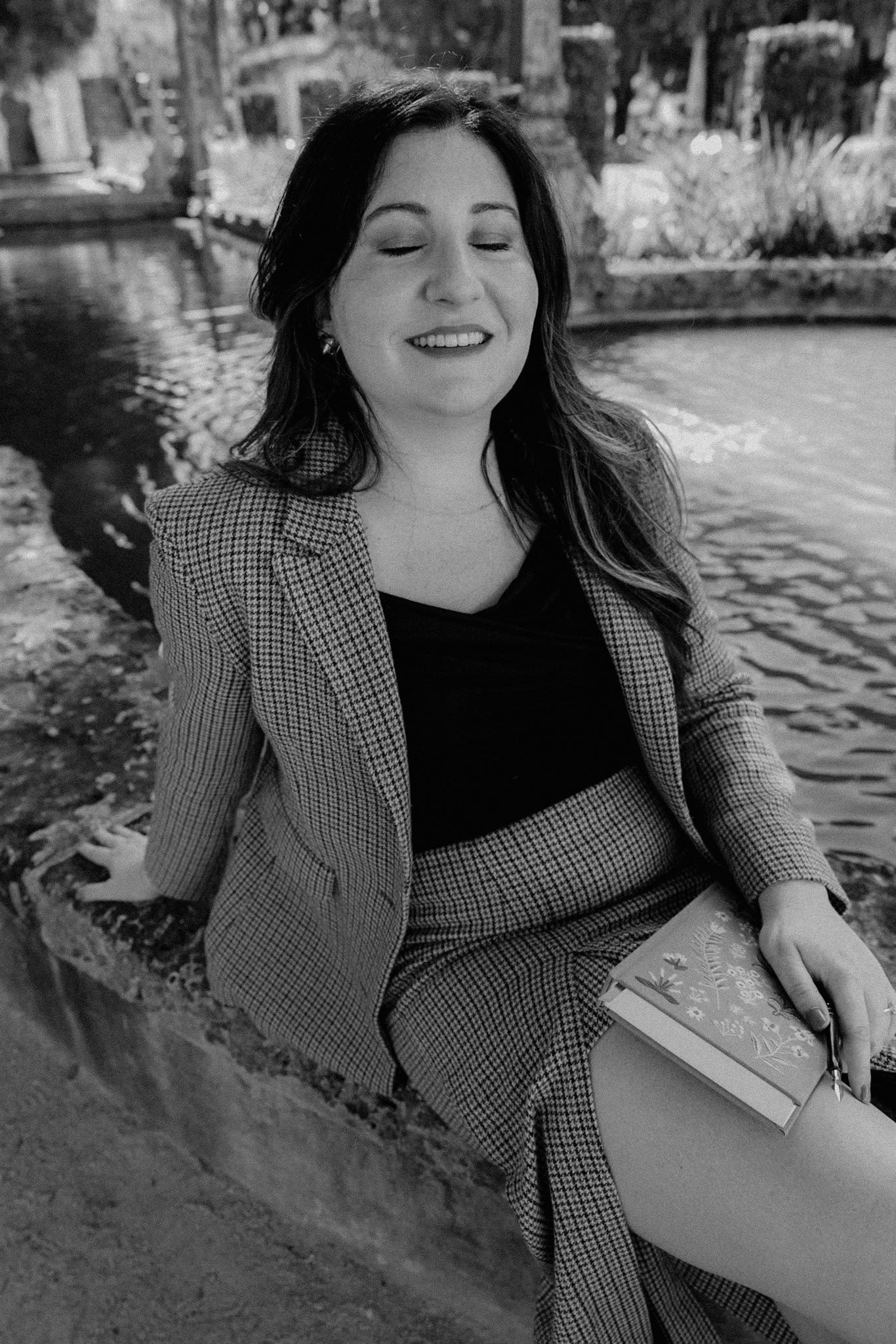
In this episode of The Stories That Form Us, I sit down with Kayla Dean, the founder of The Literary Co and a copywriter and messaging strategist for creative founders and service providers. We talk about something we’ve both been thinking about a lot — what it actually means to say the thing in your business, and everything that tends to get in the way before you get there.
Kayla came up through English degrees and a lifelong love of literature. Old stories, old forms, the kind that have been around long enough to actually mean something. She came to copywriting somewhat sideways — thinking it was going to be separate from her real writing life — and has spent years discovering they were never separate at all.
By the way, hi. I’m Amy, founder of Unbridled Form, where I work with creative founders and leaders to close the gap between the identity driving their work and the brand they’re actually putting into the world. The Stories That Form Us is where I get to explore that with people whose lives and work remind me why story matters so much.
Meet Kayla Dean of The Literary Co
Kayla is a copywriter and messaging strategist who believes your words should be more human, your marketing more authentic, and your messaging less strategic and more true to you. She brings a literary lens to brand writing — inspired from older forms, going back to roots, finding the language that actually carries what someone means to say. Her work is for the founders who know they have something to say and just need someone to help them get there.
A Few Things That Rose to the Surface
The editing voice that lives in the back of your head.
Both of us know the internal editor well — the one who’s in there cutting things before they make it out. Kayla described it beautifully as everything that’s standing between you and what you actually want to say. I’ve been calling mine out for months. I took an improv class earlier this year thinking it would teach me to be funnier. What it actually taught me was to say the thing before you have time to negotiate with it. I think about that constantly now.
What “storytelling” means before it became a buzzword.
This one came up early and we kept returning to it. We’re both a little tired of the word, honestly — not because it’s wrong but because it’s been used so many times that it’s lost its weight. Kayla’s background in literature is where she goes when she needs to remember what it actually meant before it became a LinkedIn caption. For me, it’s the lore — the mythology, the deeper world underneath the work. We’re both reaching for the same thing with different words, and I loved finding that in real time.
People bury their most interesting ideas.
Kayla said this and I felt it immediately. She’s done audits of people’s websites and found the thing that was actually the point three pages deep, sitting quietly at the bottom of the page, filed under probably too much. This is one of the truest things someone has said to me about why brand work matters. It’s not that people don’t know what they think. It’s that they’ve talked themselves out of owning it fully, usually in the name of being more accessible or more digestible or more whatever-the-industry-expects.
Authenticity and the fear of being too weird.
I shared with Kayla about the season I spent watering down words like archetypes and mythology because I thought they sounded too educational, too deep, too much for most people. She navigated something similar — wanting to bring more of her literary background into her work and making sure it didn’t feel too niche, too strange, not immediately understandable. I think we’re both done with that particular fear. The people who are for you don’t need you to be simpler. They need you to be more fully yourself.
Urgency from generosity, not scarcity.
We landed on this toward the end and it’s one I keep thinking about. Real urgency isn’t a countdown timer. It’s helping someone see that the thing they’ve been sitting with — the brand refresh they keep pushing, the words they know aren’t doing them justice — is actually costing them something. And that now is genuinely the time. That’s not pressure. That’s care. There’s a beautiful difference between those two things.
You can’t help people say the true thing if you’re afraid to say yours.
This didn’t come up as a thesis statement — it just surfaced organically and landed the way things do when they’re true. Kayla talked about going back to her journals, doing brain dumps in her notes app, trying to get past all the noise between her and her actual thinking. I’ve been doing similar work — separating the creating from the editing, making room for the thing that’s actually trying to move through me. You can’t facilitate that process for someone else if you’re not living it yourself.
What I Loved Most
The reminder that most of us are in a long warm-up to saying the thing we actually mean — and that the work is just helping people get there faster.
The reframe of storytelling as something that’s witnessed, not manufactured. You’re not building something new. You’re revealing what’s already there.
The uncomfortable truth that the editing voice in your head is not strategic. It’s protective. And there’s a difference.
The shared obsession with going back to older forms — mythology, literature, lore — to remember what depth actually feels like before it gets flattened into content.
The energy you build your business in is the energy your people receive.
The Stories That Form Us
The Stories That Form Us is a podcast about the narratives shaping our creative work, our brands, and the way we move through the world. It’s a production of Unbridled Form, a brand strategy and design studio helping founders tell the story only they can tell.
Listen on Spotify | Watch on YouTube
At Unbridled Form, story is why I do what I do. Your brand isn’t just a logo or a website. It’s a living identity, already moving through your work and ready to be seen in its fullness. Explore Unbridled Form’s services →








Read the Comments +